
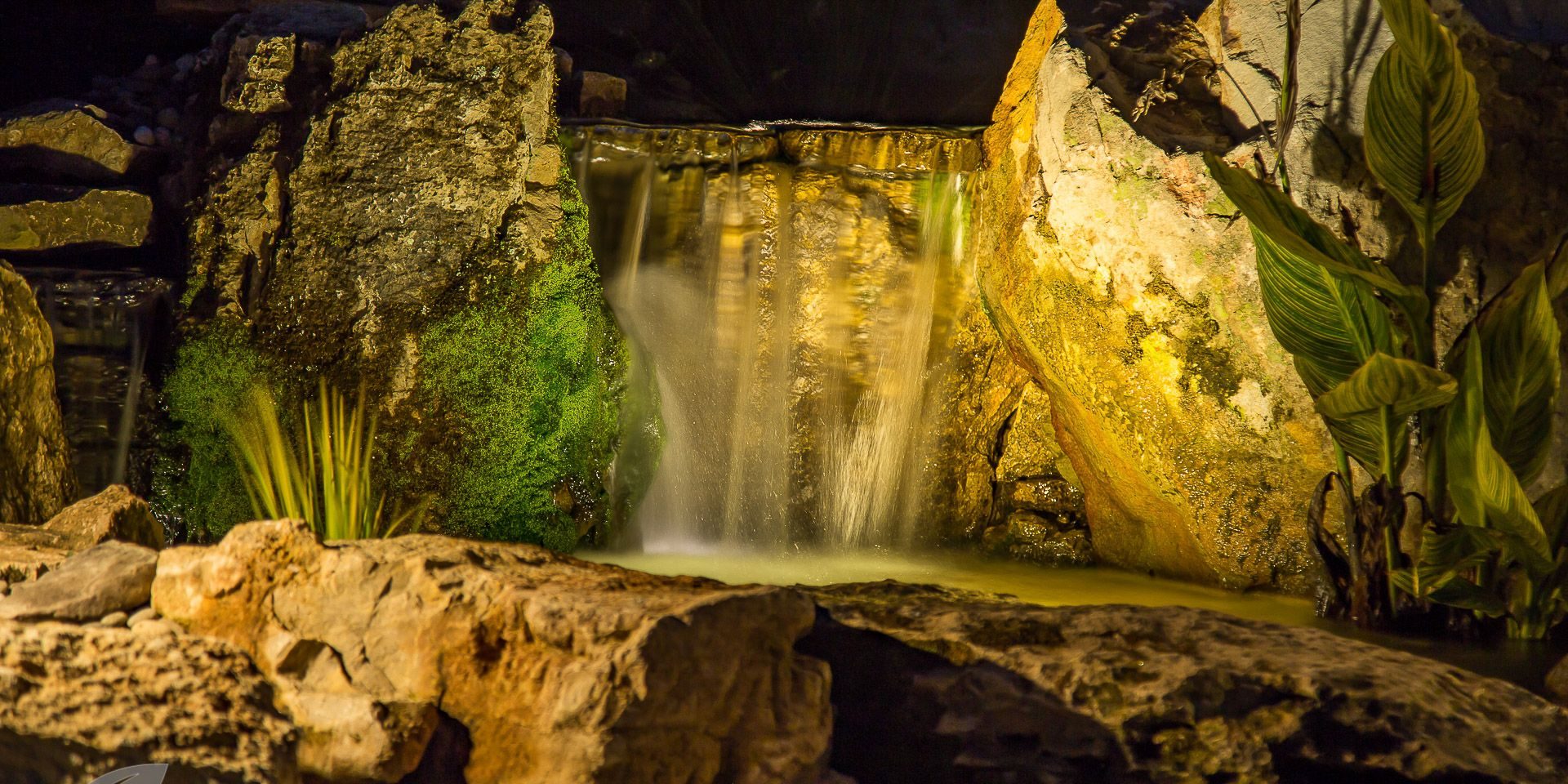
Outdoor lighting is like the brushwork of an artist—each technique adds depth, emotion, and intention to the final scene. For our Altoona, State College, Johnstown, and Bedford clients, we use a variety of lighting methods to highlight features, improve safety, and create beautiful nighttime environments. Below are some of the most effective techniques used in landscape lighting design.
TL;DR – Techniques for Outdoor Landscape Lighting
- Outdoor landscape lighting uses a variety of techniques—like uplighting, shadowing, moonlighting, and path lighting—to highlight features, create safety, and add beauty.
- Each method serves a specific purpose, from emphasizing textures to illuminating walkways or enhancing water features.
- The right combination of techniques creates a cohesive, dramatic, and functional nighttime landscape.
Up Lighting
Used to highlight trees, architectural features, or specimen plants from below, creating a dramatic and eye-catching effect.
Niche Lighting
Perfect for decks, entryways, gazebos, and other structures where fixtures must be mounted directly to the surface.
Mirror Lighting
Takes advantage of the reflective surface of ponds and water features to create stunning mirrored scenes.
Cross Lighting
Illuminates an object from two different angles to reveal surface texture and avoid the flat appearance caused by single-source lighting.
Wall Washing
Provides soft, even illumination across walls. It can also act as a glowing backdrop for unlit plants or architectural elements.
Shadowing
Casts intentional shadows onto walls or surfaces to create visual interest and artistic silhouettes.
Path Lighting
Lights walkways, planting beds, and transitional areas. This technique helps guide movement and ties multiple lighting scenes together.
Grazing
Uses steep angles of light against textured surfaces—such as stone walls or tree bark—to emphasize depth, shadows, and patterns.
Back Lighting
Illuminates the edges of an object from behind, creating a glowing outline that emphasizes shape and form.
Moon Lighting
Recreates the soft, natural glow of moonlight by placing fixtures high in trees and casting light downward. This unifies lighting scenes and eliminates dark gaps.
Down Lighting / Step Lighting
Used to safely illuminate steps, stairs, and transitions—reducing hazards and adding subtle beauty.
