
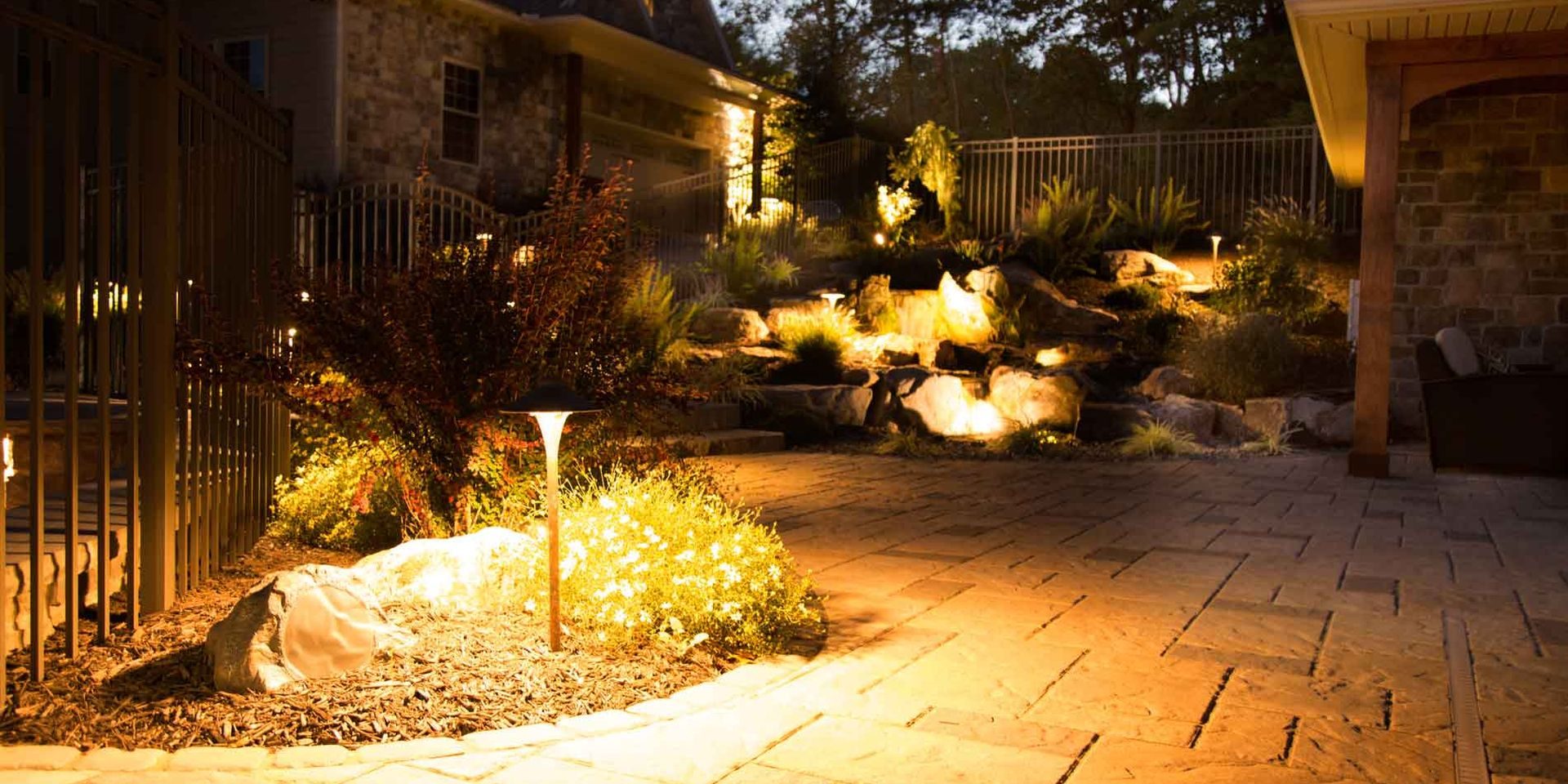
Great landscape lighting goes far beyond simply placing fixtures in the yard. With the right design principles, you can create outdoor spaces that feel cohesive, balanced, and visually stunning from every angle. Below are six core lighting concepts that shape a beautiful and functional lighting design for your Altoona, State College, Johnstown, or Bedford home.
TL;DR - 6 Landscape Lighting Concepts
- Great landscape lighting relies on six core concepts: cohesion, depth, focal points, quality & direction, perspective, and balance & symmetry.
- Cohesion keeps the entire scene visually connected without dark gaps.
- Depth uses layered lighting to create a three-dimensional look.
- Focal points highlight key features like water features, patios, or entryways.
- Quality and direction ensure soft, controlled light instead of harsh glare.
- Perspective makes the design look beautiful from every viewing angle.
- Balance and symmetry maintain visual harmony across the property.
Cohesion
Cohesion is the harmony of the entire lighting scene. When areas of light blend naturally from one space to the next, the viewer experiences a smooth, uninterrupted panorama. Dark, unlit “black holes” disrupt the flow, fatigue the eyes, and diminish the beauty of the design.
Depth
Depth creates a three-dimensional outdoor scene. This is achieved by lighting elements in the foreground, middle ground, and background at different intensities. Using varying beam spreads and wattages helps guide the eye through the space, giving the landscape greater visual richness.
Focal Points
Focal points help direct attention and create visual interest. These can be architectural features, statues, water features, entranceways, patios, or gathering spaces. Well-placed lighting highlights these areas and guides the viewer through the scene with intention.
Quality and Direction
Low-voltage LED lighting allows precise control over the direction and softness of light. Instead of harsh, exposed bulbs, light is cast onto surfaces to create subtle reflections and mood. With the right techniques, lighting can be warm, inviting, dramatic, or understated.
Perspective
Perspective considers how the lighting design appears from every angle—both outside in the yard and inside the home. A great lighting layout ensures the scene is attractive and balanced from all viewing positions.
Balance and Symmetry
Balance and symmetry enhance the natural structure of the landscape. Repeating patterns—such as rows of shrubs, stone walls, or fencing—should be illuminated in a way that preserves and highlights their visual rhythm. A well-balanced design also ensures one side of the property isn’t noticeably brighter than the other.
