
TL;DR: What You Should Know About Pondless Waterfalls
A pondless waterfall recirculates water from a hidden underground basin, making it a low-maintenance and safer alternative to traditional ponds. It can run year-round with proper care, operates on minimal electricity, and typically costs between $3,000 and $15,000 depending on size and design.
How Does a Pondless Waterfall Work?
Building a pondless waterfall often raises many questions. Understanding how it works helps you decide if it’s the right feature for your backyard.
The system begins underground with a basin that holds all the water for the feature. This basin is concealed beneath decorative river gravel, allowing the waterfall to appear as if it naturally disappears into the landscape.
Inside the basin sits a pump vault, which houses the pump that powers the waterfall. Optional accessories such as an auto-fill float or water treatment components can also be installed inside this vault.
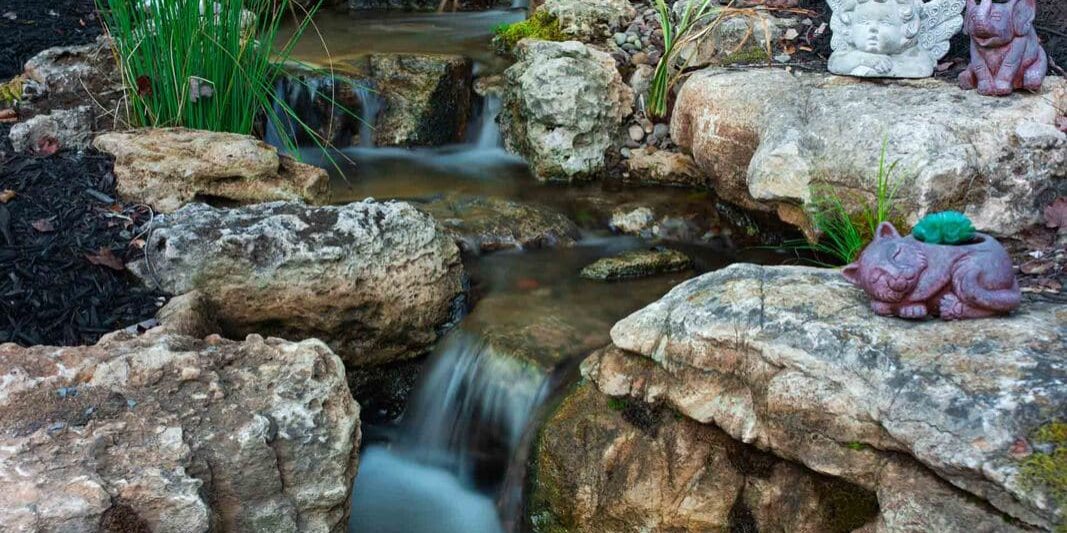
Water is pumped from the basin up to the top of the stream, where a spillway distributes it into the first cascade. Carefully placed boulders and stonework guide the water down through the waterfalls and stream before it returns to the underground basin to be recirculated continuously.
The system begins underground with a basin that holds all the water for the feature. This basin is concealed beneath decorative river gravel, allowing the waterfall to appear as if it naturally disappears into the landscape.
Inside the basin sits a pump vault, which houses the pump that powers the waterfall. Optional accessories such as an auto-fill float or water treatment components can also be installed inside this vault.
Water is pumped from the basin up to the top of the stream, where a spillway distributes it into the first cascade. Carefully placed boulders and stonework guide the water down through the waterfalls and stream before it returns to the underground basin to be recirculated continuously.
Should You Leave It Running All Year?
When properly constructed, a pondless waterfall can operate in all four seasons.
During winter months, ice buildup may lead to minor water loss, so water levels should be monitored if the feature remains running. If you choose to shut it down for the winter, proper winterization is important to protect the pump and plumbing components.
During winter months, ice buildup may lead to minor water loss, so water levels should be monitored if the feature remains running. If you choose to shut it down for the winter, proper winterization is important to protect the pump and plumbing components.
How Much Does It Cost to Build a Backyard Waterfall?
The cost of a pondless waterfall largely depends on its size, materials, and design complexity. Contractor pricing may also vary.
Most professionally installed pondless waterfalls range from $3,000 to $15,000, while larger or more elaborate designs can exceed that range.
When comparing pricing, ensure you are evaluating similar features. Measurements alone may not accurately communicate the visual impact of a waterfall. Whenever possible, ask to see completed projects in person to better understand what you are investing in.
Most professionally installed pondless waterfalls range from $3,000 to $15,000, while larger or more elaborate designs can exceed that range.
When comparing pricing, ensure you are evaluating similar features. Measurements alone may not accurately communicate the visual impact of a waterfall. Whenever possible, ask to see completed projects in person to better understand what you are investing in.
Do Pondless Waterfall Pumps Use a Lot of Electricity?
Modern pumps designed for pondless waterfalls are built for energy efficiency. Most standard residential systems cost only a few dollars per month to operate.
Low-voltage LED lighting can also be incorporated into your waterfall design. These lighting systems require minimal electricity while dramatically enhancing nighttime beauty and ambiance.
Low-voltage LED lighting can also be incorporated into your waterfall design. These lighting systems require minimal electricity while dramatically enhancing nighttime beauty and ambiance.
Do Pondless Waterfalls Need a Filter?
Most pondless waterfalls do not require a traditional filtration system.
The gravel layer covering the underground basin naturally filters out larger debris such as leaves, sticks, and small branches before they reach the pump. This simple yet effective design helps keep maintenance requirements low.
The gravel layer covering the underground basin naturally filters out larger debris such as leaves, sticks, and small branches before they reach the pump. This simple yet effective design helps keep maintenance requirements low.
Why Choose a Pondless Waterfall?
A pondless waterfall brings the soothing sights and sounds of flowing water to your backyard without the maintenance demands of a full pond.
Because there is no standing body of water, pondless systems are often considered a safer option for households with children or pets. They are energy-efficient, visually stunning, and can be enjoyed throughout the year.
If you’re ready to transform your outdoor space with a custom water feature, Tussey Landscaping can design and install a pondless waterfall that complements your landscape beautifully.
Because there is no standing body of water, pondless systems are often considered a safer option for households with children or pets. They are energy-efficient, visually stunning, and can be enjoyed throughout the year.
If you’re ready to transform your outdoor space with a custom water feature, Tussey Landscaping can design and install a pondless waterfall that complements your landscape beautifully.
