
You have big dreams for your backyard. Charming pathways that wind between the trees. Shallow steps leading to the lower part of your yard. And to top it all off, a beautiful patio where you can host sunset dinner parties.
But as you research paver options, you’re intrigued by the idea of permeable pavers. You’ve noticed that sometimes water pools on traditional patios—could permeable pavers be the solution?
Or is it better to go the traditional route, making sure to install proper drainage? Do permeable pavers have drawbacks you’re not considering?
At Tussey Landscaping, we’ve been making backyard dreams come true since 1991, and today, we’d like to compare and contrast permeable pavers with traditional patio pavers. We’ve used both in our landscaping projects and are aware of their pros and cons.
After reading this blog, you should be well-informed about what will work best for your project.
Let’s get into it!








TL;DR - Permeable Pavers vs. Traditional Patio Pavers
- Permeable pavers are an alternative to traditional pavers that allow water to soak through to the ground.
- Permeable pavers have the advantage of better drainage, but the disadvantage of higher maintenance.
- Both options have pros and cons, but overall, traditional pavers are more popular.
- If you go the traditional route, professional installation is key to reducing drainage issues
Now, let’s explore the topic in more depth!
What Are Permeable Pavers?
Permeable pavers are an alternative to traditional patio pavers.
Why is an alternative necessary?
Well, since traditional pavers are made from concrete, brick, or natural stone, with concrete being the most popular option, water cannot get through them. If the pavers are not installed with proper drainage, they can cause water pooling or drainage problems.
Permeable pavers solve this problem with innovative designs that allow water to get through.
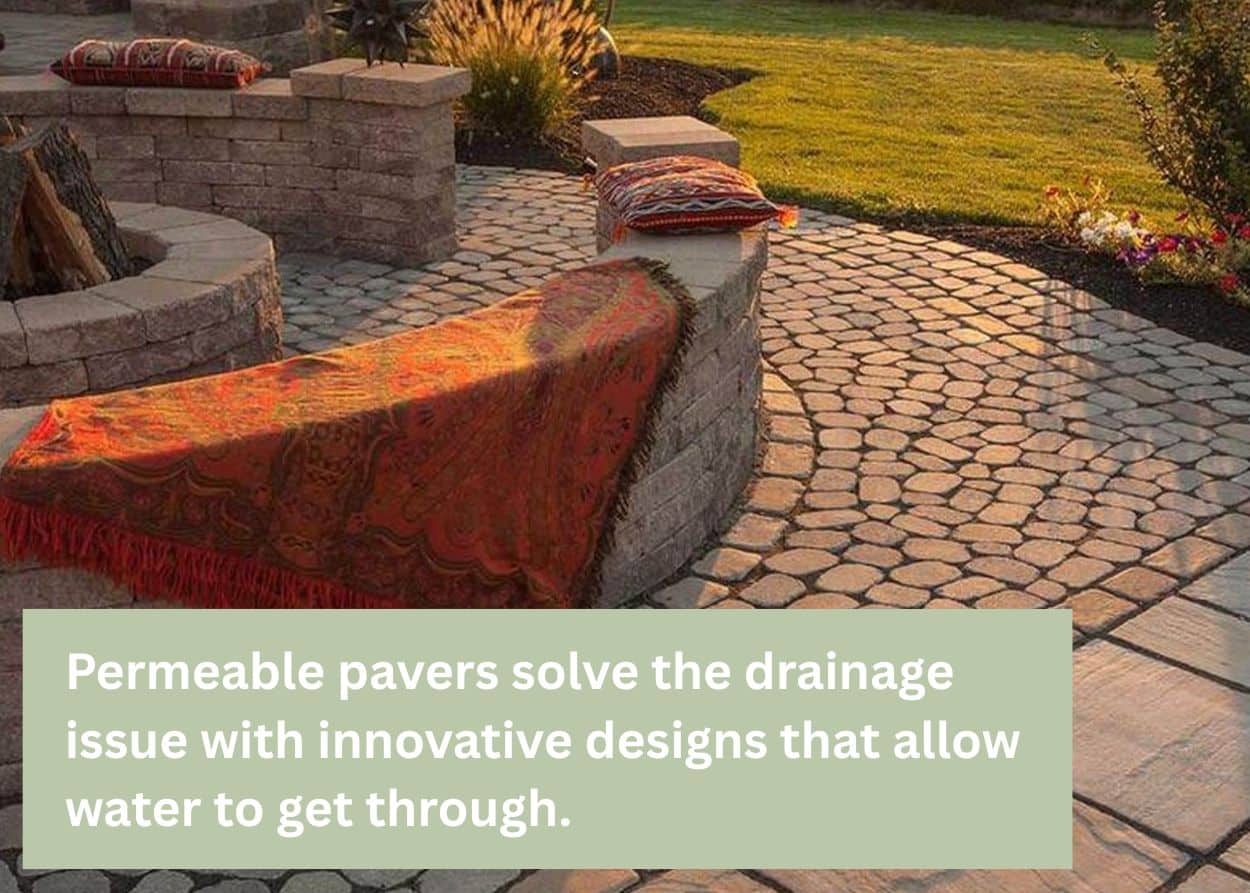
Usually, this is done either with pavers that have holes in them, or pavers that are carefully placed with gaps between them where water can flow through.
However, this can cause a new issue—any place where water can flow through is a place where weeds can grow.
When deciding between traditional and permeable pavers, it comes down to drainage, maintenance, durability, cost, and curb appeal.
Let’s explore those topics!
Drainage
Traditional pavers are usually installed over a compacted base with sand or mortar joints, which can leave little room for water to seep through. As a result, rainfall or snowmelt tends to run off the surface and flow toward storm drains or low spots in the yard. If these pavers are installed poorly, this can create problems like pooling water, icy patches in winter, erosion, and added strain on municipal drainage systems.
Permeable pavers, on the other hand, are specifically designed to allow water to pass through the joints and into a base layer of gravel or crushed stone.
Usually, people who choose permeable pavers do so for drainage reasons. However, traditional pavers are fine, so long as they’re installed correctly! It’s vital to install the pavers in a way that directs water away from structures, and you may also need to install drainage systems like French drains.
And remember—when in doubt, call a professional!
Maintenance
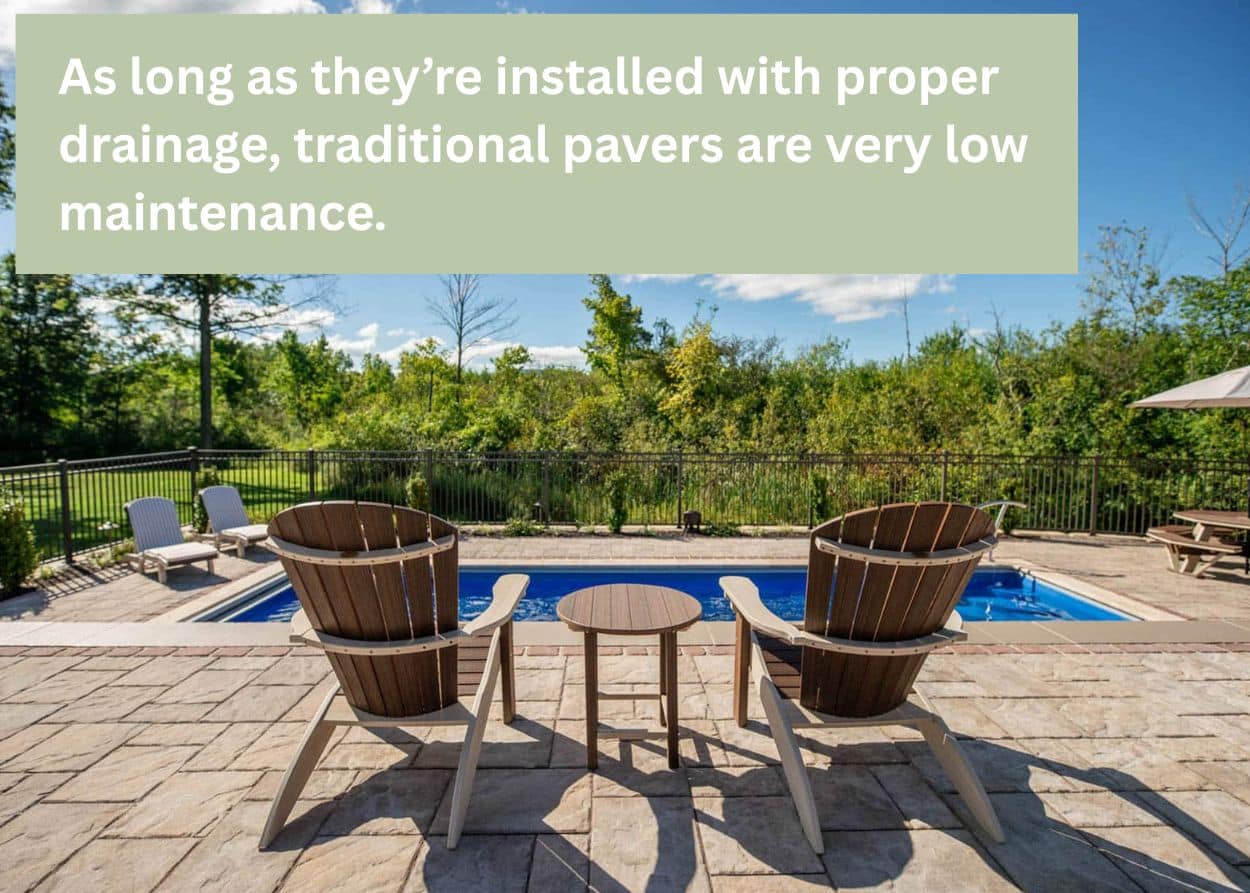
For the most part, as long as they’re installed with proper drainage, traditional pavers are very low maintenance. Really, the only thing you need to keep an eye out for is the joints —you may need to replenish the polymeric sand between the paver joints at times, and shifting, settling, or freeze-thaw cycles may cause cracking that you should seal before it gets worse.
On the other hand, permeable pavers require quite a bit of maintenance. Debris builds up in the drainage cracks, holes, or spaces, and weeds sprout and grow. This causes two problems:
- The weeds are unsightly
- The pavers don’t drain as well
To solve this problem, you have a few options, including:
- Spraying weed killers
- Pressure washing
- Clearing debris with hand tools such as stiff brooms or flat tools
- Vacuuming with a shop vac
All things considered, permeable pavers are usually more maintenance-intensive than traditional pavers.
P.S. If you’re interested in low-maintenance options, check out our Guide to Low-Maintenance Landscaping!
Durability
With both permeable pavers and traditional pavers, the durability depends on the quality of the installation. The gaps between permeable pavers make them less likely to crack if the ground shifts slightly. At the same time, they’re more susceptible to shifting around.
Cost
Whether you go with traditional concrete pavers or permeable pavers, the costs vary widely depending on the pavers you choose, the size of the project, and other variables. To get a good estimate of what cost you can expect and how permeable pavers stack up to traditional concrete pavers, use our project planner.
Curb Appeal
When it comes to curb appeal, the differences between traditional and permeable pavers are negligible. Ultimately, it comes down to your personal preference. Look at various options. Which variety appeals to you?
However, here are a few things to consider when you make your choice:
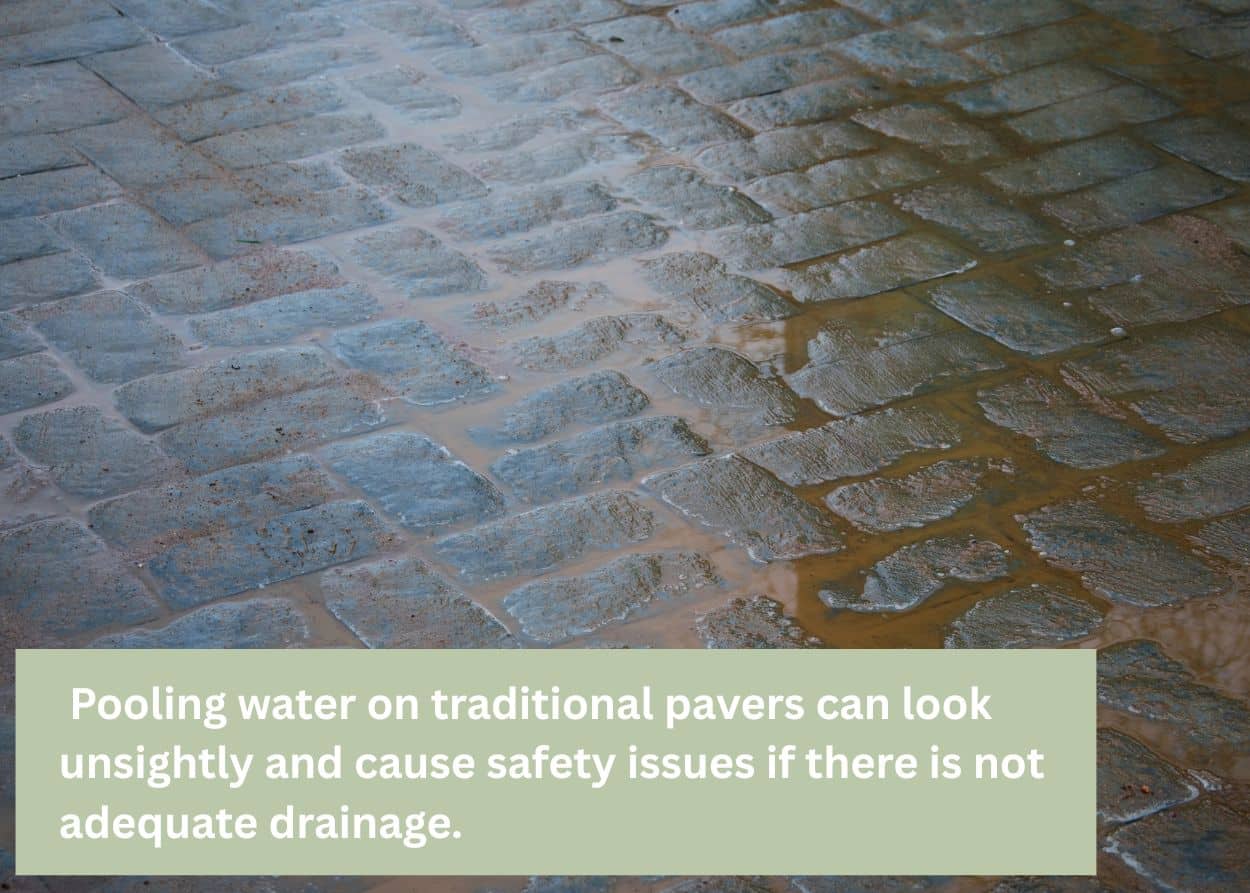
- Water pooling on traditional pavers doesn’t look very nice, and can leave a slimy residue behind when it eventually evaporates
- Unsightly weeds are more likely to grow between permeable pavers
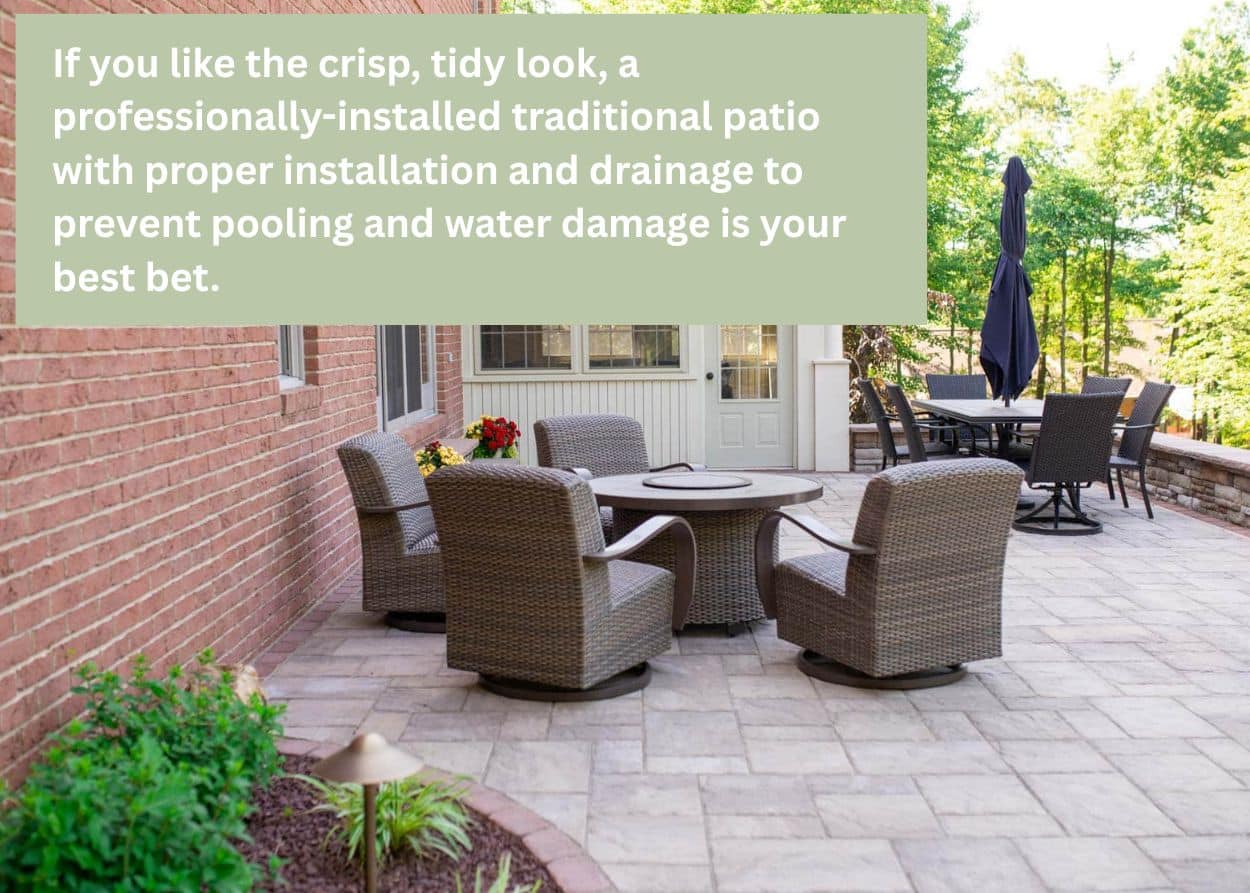
If you like the crisp, tidy look, a professionally-installed traditional patio with proper installation and drainage to prevent pooling and water damage is your best bet.
It takes some maintenance to get that tidy look with permeable pavers, but it can be done. On the other hand, if you want a garden patio that blends nature with the hardscape, you may like the look of vegetation growing between the pavers.
Pros and Cons of Traditional vs Permeable Pavers
With all the above information in mind, here are the pros and cons of traditional vs permeable pavers
Pros of traditional pavers
- Low-maintenance
- Generally cheaper to install
- Looks nice and functions well if installed with proper drainage
Cons of traditional pavers
- Can cause major drainage and water management problems if installed improperly
- Pooling water can look unsightly and cause safety issues if there is not adequate drainage
Note: the cons of traditional pavers are all solvable problems if installed by a professional! It’s the unprofessional or DIY projects that can sometimes go off the rails and cause significant drainage problems.
Pros of permeable pavers
- Water drains directly into the ground instead of pooling or causing water damage
- Less susceptible to cracking
- Environmentally friendly
Cons of permeable pavers
- Can be more expensive than traditional pavers
- Maintenance, debris control, and weed control can become time-consuming
Note: Overall, although traditional pavers are more popular, permeable pavers have their place. Talk to your landscaper about your vision, and they will be able to direct you to the pavers that will fit with the look you're going for without causing drainage headaches.
Where to Find a Paving Pro
Whether you choose permeable pavers or traditional pavers for your driveway, walkway, or patio, one thing is certain—it’s always smart to hire a reliable contractor to install it for you.
Think of it this way:
The biggest issue you’re likely to encounter with traditional pavers is drainage problems, and the biggest headache with permeable pavers is maintenance. Getting a professional involved helps with both problems.
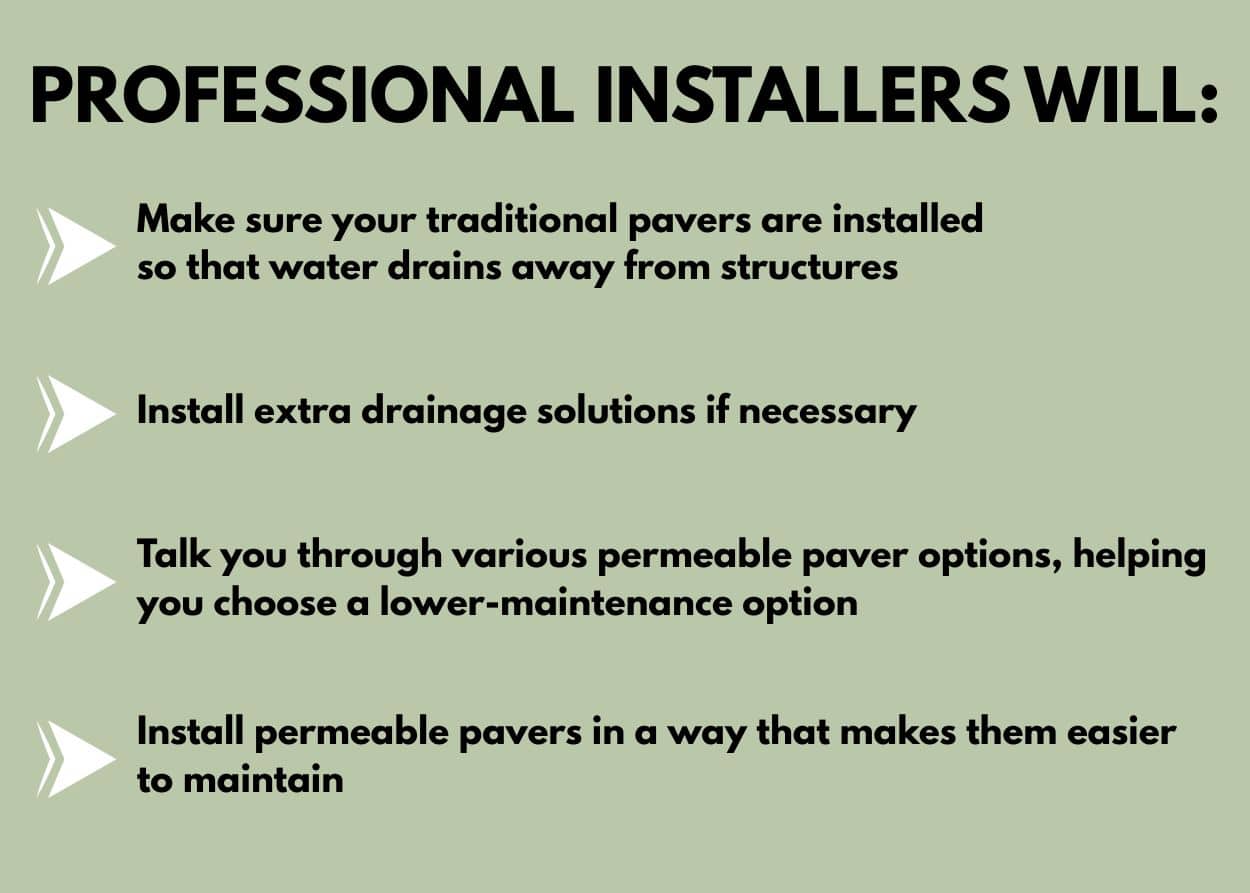
Professional installers will:
- Make sure your traditional pavers are installed so that water drains away from structures
- Install extra drainage solutions if necessary
- Talk you through various permeable paver options, helping you choose a lower-maintenance option
- Install permeable pavers in a way that makes them easier to maintain
At Tussey Landscaping, our core values are honesty, artistry, communication, and satisfaction. Whether you ultimately choose traditional pavers or permeable pavers, we’re committed to building you a headache-free space you can be proud of.
If you live in central Pennsylvania, Tussey Landscaping can help you with all your backyard needs, including:
- Landscape design
- Swimming pool construction
- Outdoor kitchen construction
- Water garden construction
- Landscape maintenance
And more!
Contact us today for a meaningful conversation about your dream outdoor landscape.
